








In this painting lesson (part 1 of 4), Douglas Matthews, Professional Artist and Tutor shows you the basics of Painting in Acrylics and how to get started and choose the best paints and materials to use as a beginner.
Watch Part 1 on YouTube – it’ll be well worth 17-minutes of your time!
Key Materials and Supplies
1. Acrylic Paints:
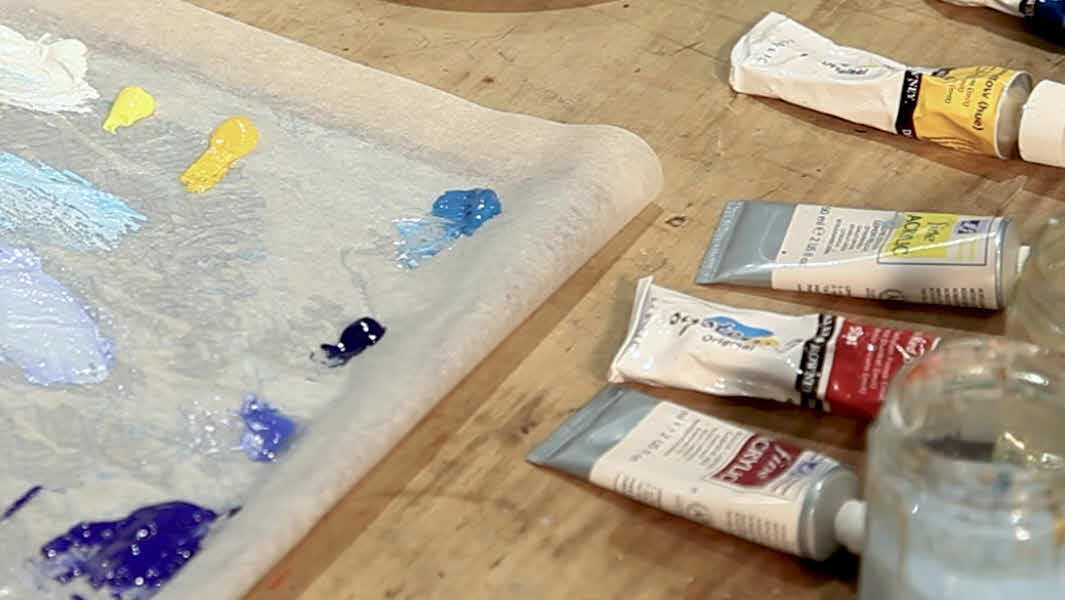
Available in tubes and other containers. Douglas uses ‘Daler Rowney System 3’, a student-grade but high-quality brand. He suggests focusing on primary colours grouped into two main categories:
- Warm colours: lemon ochre, cadmium ochre, cadmium red, crimson.
- Cool colours: cerulean blue, Prussian blue, cobalt blue, ultramarine.
2. Palettes:
Two types recommended:
- Stay-wet plastic palettes (around £15), which keep paint moist longer.
- DIY wet palette made with a tray and water to maintain moisture, a budget-friendly alternative.
- A standard plate can be used but acrylic paint dries fast, which can be a challenge.
3. Brushes:
- Douglas suggests a variety of flat, filbert (rounded edge), and large brushes for different areas.
- Palette knives are useful for applying paint and creating sgraffito effect (scratching effects).
4. Additional Supplies:
- Water containers for cleaning brushes.
- Kitchen roll (or paper towels) for managing paint and moisture.
- Primer such as Gesso is essential for preparing surfaces like paper, canvas, or board to prevent paint from soaking in and to improve adhesion.
- Inexpensive packs of three canvases can be found at bargain shops.
Painting Techniques and Tips
1. Paint Handling:
- Acrylic paints dry faster than oils or watercolors, so work efficiently.
- Use of acrylic extender can slow drying time but often not necessary if painting fast.
- Secure caps on paint tubes tightly to prevent drying out.
2. Colour Mixing:
- Use primary colours thoughtfully rather than selecting many hues randomly.
- Mix warm and cool colours in pairs or triplets to create a controlled palette.
- Keep paints organized by colour groups for easy access and efficient mixing.
3. Painting Approach:
- Start with simple subjects like skies, which have less symmetry and are easier to paint than complex shapes (e.g. bottles).
- Enjoy the creative process without stress – there are no “wrong” shadows or colors as painting is subjective.
- Using photographs as references is helpful, but online images can also be a resource.
4. Surface Preparation:
- Primer (Gesso) can be applied to any surface to improve paint adherence.
- This is especially important when painting on paper, board, or reused surfaces.
Key Takeaways
- Beginners benefit from starting with simple, non-symmetrical subjects to build confidence.
- Enjoyment and experimentation are vital parts of learning to paint with acrylics.
Conclusion
This video by Douglas Matthews provides a clear, practical introduction to acrylic painting, covering essential materials, preparation, and techniques. The emphasis is on enjoying the process and helps beginners and intermediate painters build a reliable foundation for their skills.
Watch the video and please do consider leaving us a comment!
The next lesson in the series focuses on painting skies, clouds and horizon lines, continuing to build your foundational acrylic painting skills.
Join the Discussion