








In under 15-minutes this art tutorial by artist Mark Holden guides viewers through how to paint a Tuscan landscape in watercolour using simple techniques and building confidence without relying on drawing outlines. The process focuses on layering glazes (thin washes of paint) to build up colour, depth, and detail gradually.
Watch the video below but get yourself a nice cup of tea (or perhaps a little glass of Chianti!) before you start – it’s just under 15-minutes and you’ll learn more if you stay and watch the full lesson : )
Step-by-Step Process for painting a Tuscan Landscape
1. Sky Wash:
Apply a warm, dusky mauve wash (red tinted with blue) to represent a late-in-the-day Tuscan sky.
2. Outline of the Tuscan Hills:
Shape the wash to define two distant mountains, using references such as photos or previous paintings.
3. Middle Landscape Bands:
Paint overlapping curved bands of light green glazes, simulating the folded Tuscan hills.
4. Vineyard Lines:
Use quick, curved strokes with spacing to mimic vineyard rows on hillsides.
5. Foreground Shadows:
Apply purple-blue tones to corners to represent long, soft shadows typical of dusk light.
6. Villa Roofs:
Add simple terracotta roofs using mixed orange (red + yellow), focusing on light direction and simple shapes without detailed structures.
7. Hill Wash and Highlights:
Add thin blue washes to hills near the villa for contrast and a band of lighter areas indicating light hitting the landscape.
8. Mid Layer Enhancements:
Drop darker green glazes to add contrast and define vineyard ridges and fields with curved lines.
9. Shadow Lifting and Details:
Lift paint in shadow areas to create hedgerows or small trees; add darker blue for shadows and layering.
10. Secondary Sky Glaze:
Apply a rusty red-brown wash to deepen sky colour and add subtle cloud wisps.
11. The Cypress Trees:
Paint narrow, elliptical dark green shapes with shading on left sides (light from right) to suggest depth and scale. Add smaller trees to create the perspective of being in the distance.
12. Final Details on Villa:
Add simple door and window shapes with shadow hints, vertical divisions, and a chimney dabbed in red.
13. Finishing Touches:
Adjust shadows under eaves, edges of buildings, and ground shadows. Use tissue to correct bleeds.
14. Signature and Interest:
(As always) Mark adds his pen signature and three small birds in the sky for a final point of interest.
Key Concepts and Techniques
- No Drawing Required: The entire painting is created using brushes and paint, simplifying the process and encouraging confidence.
- Brush Selection: The dagger brush (chiselled and narrow) is recommended for varying stroke widths and detail control by pinching the tip.
- Colour Mixing: Mixing colours on a white saucer or plate helps visualize hues before applying. For example, adding a little blue to red creates a dusky mauve for the sky.
- Light and Shadow Awareness: Consistently considers light direction (right to left) to create believable shadows and highlights.
- Layering for Depth: Multiple glazes, from light washes to darker mid-tones and shadows, build realistic landscape depth.
- Curved Lines for Landscape Shape: The rolling Tuscan hills and vineyard rows are represented by overlapping curved bands and lines.
- Use of Colour Temperature: Slightly cooling the red with blue in the sky glaze creates a dusky, atmospheric effect typical of the beautiful Tuscan sunsets.
- Adjustments While Wet: The tutorial highlights the ability to lift paint or manipulate wet layers for texture and detail.
Summary
In this ‘under 15-minute art lesson’ Mark presents his simple, effective approach on how to paint a Tuscan landscape in watercolour using glazes, focusing on capturing the warmth, light, and characteristic curved hills without complex drawing or details.
It emphasises colour mixing, light direction, layering techniques, and brush control to build a convincing and atmospheric scene that evokes a late-day Tuscan scene.
The next lesson in the series focuses on painting a Highland cottage in a Scottish Glen and continuing to build your watercolour painting skills.
Previous lessons in this series:
More information on the earlier lessons in this series can be found at:
Course Intro to painting landscapes and cityscapes.
Part 1 – Painting a West coast beach scene.
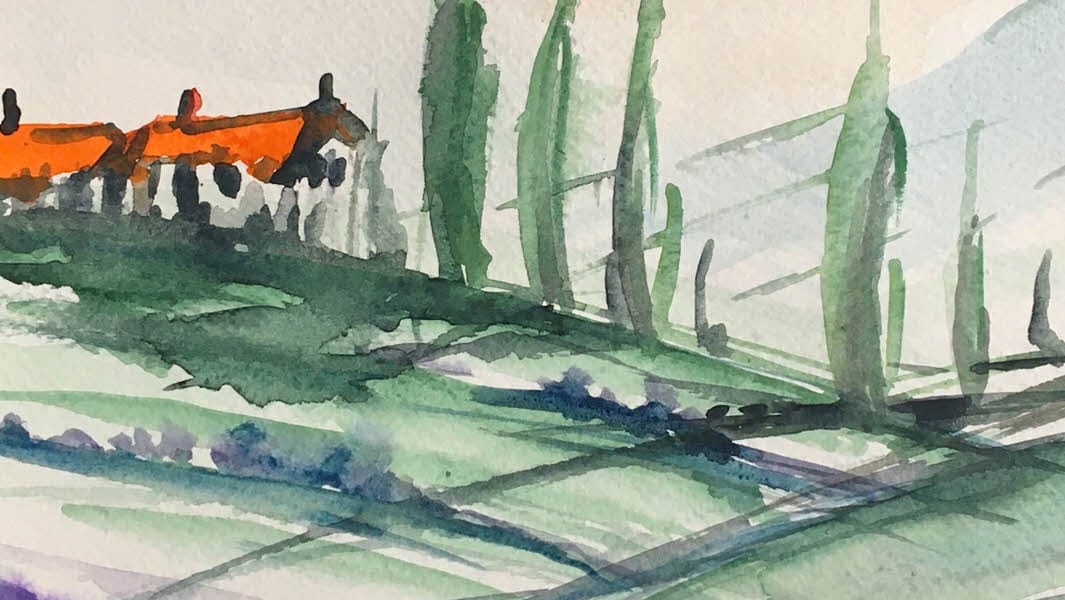
Tuscan Landscape in Watercolour by Mark Holden.
Join the Discussion