








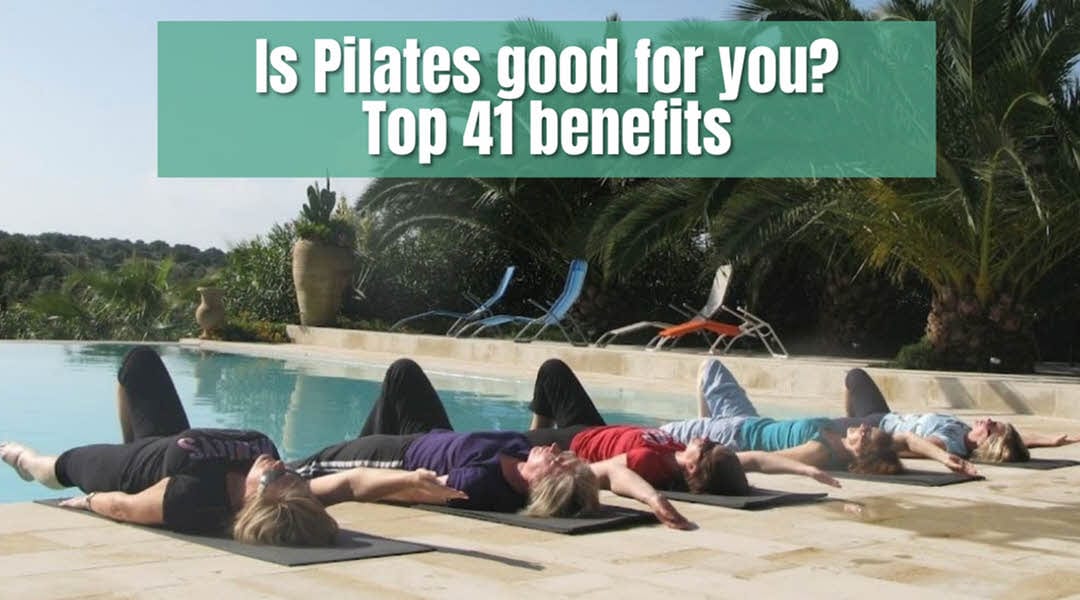
There are many benefits of Pilates that can improve your everyday life. Pilates is a well-known exercise and lifestyle across the globe, and is a popular choice of exercise for many people. Research suggests that nearly 1 million people take part in pilates classes each week in the UK. The number of online searches has been increasing too, which we believe is likely influenced by the growth in online video (reels, shorts, tik toks etc) as well as social media.
The exercise Pilates was originally developed by Joseph Pilates, who dedicated his entire life to improving physical and mental health during the early 20th Century.
What are the benefits of Pilates?
Have you ever thought about its benefits, and what exactly Pilates is good for? Our team of qualified Pilates tutors have listed 41 health benefits of Pilates, so get yourself a cuppa and keep reading!
1. Pilates improves your posture
Is pilates good for posture? Yes, Pilates can benefit you to strengthen those underdeveloped muscles, and significantly improve your posture.
Poor posture forms as a result of bad habits such as slouching at your desk and chair, which can eventually cause back ache, neck ache, headache and more pains! The bad habits will result in asymmetrical muscle development, where some muscles become weaker than others.
2. Pilates is an exercise for everyone
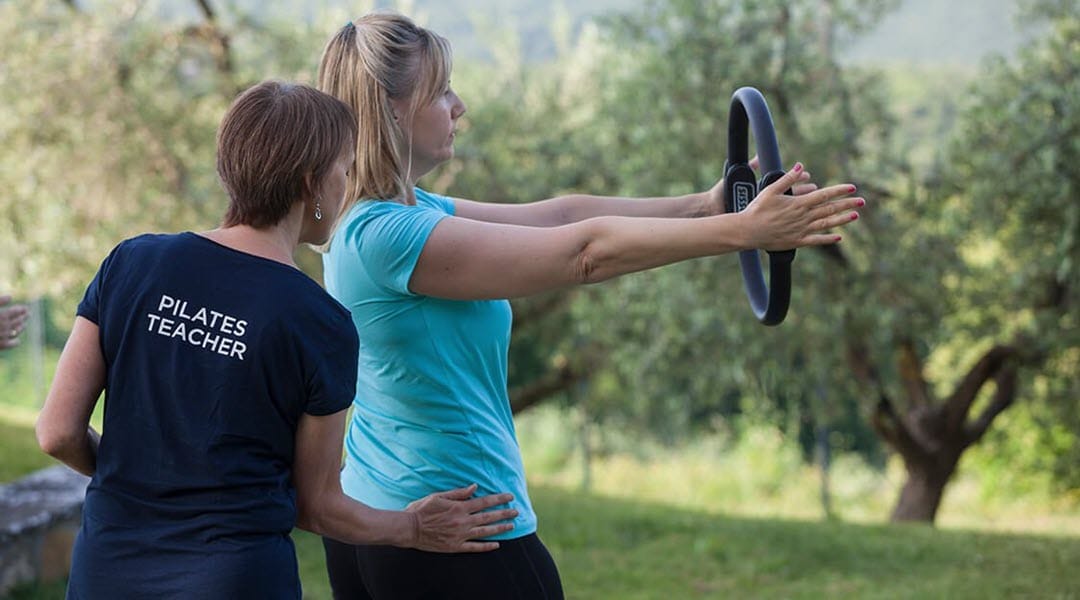
Can you start pilates at any age? Yes, it doesn’t matter if you are young or old, fit or out of shape, flexible or not. The Pilates Hub agrees that Pilates has a handful of exercises which can benefit everyone and anyone.
Pilates is a very popular exercise that loads of people do. Many celebrities use Pilates as their favourite form of exercise and say “Pilates is ‘the way’ to workout”.
3. Pilates is a good workout for your entire body
Even though the main focus of Pilates is on developing your core strength, it also plays a part in developing a full-body workout. This ensures that no specific muscle is overdeveloped or underdeveloped, giving you that perfect lean body you are looking for.
Did you know that 10 minutes of Pilates can actually greatly strengthen your muscles and improve your flexibility?
4. Great for your abs and core strength
Is pilates good for core strength? Yes, Pilates really hits your core muscle (or ‘powerhouse’ as it is called in the Pilates world), which has effects on your lower back, abdomen, hip and pelvic muscles. Not only is a strong core essential for exercises, it is also essential for everyday tasks such as carrying heavy items and picking up your shopping. Especially if you try to carry all the grocery bags in one go.
As well as helping you to better your body frame, core training also helps to achieve those flat abs that we all crave for.
5. Increasing your flexibility is a big benefit of Pilates
Does pilates help with flexibility? Yes, Pilates is great for improving both flexibility and mobility. The combination of deep stretching, core strengthening and controlled movements help to improve joint range of movement, muscle length and functional flexibility. Studies have shown that just 20 Pilates sessions can result in a 20% increase in flexibility.
It was Joseph Pilates who said: “true flexibility can be achieved only when all muscles are uniformly developed.” So rather than saying you can’t do Pilates because you are not flexible enough, you should actually participate in Pilates exercises at some point to help improve your flexibility.
Pilates can benefit you from becoming a lot more flexible which can then surprise you at how many more exercises you can then participate in. With Flavours you can go on a pilates holiday in the sun. Doesn’t that sound perfect?
6. Great rehab for back pain
Is pilates good for back pain? Yes, in most cases, especially when it’s tailored for you and led by a qualified Pilates tutor who will adapt exercises for your condition.
It is not guaranteed, and probably not a quick fix, but many people have seen their back pain reduce or gradually disappear after regularly practicing Pilates.
There is even one case study where a sufferer of back pain visited 50 specialists, only to find that Pilates has helped to cure her back pain. According to the UK NHS, a 29 minute class can strengthen the muscles that support your back. A 2024 review (available here or here) by Italian, Canadian and Serbian researchers concluded that ‘General practitioners should consider Pilates exercise as an effective strategy to manage lower back pain’.
7. Pilates places less pressure on your knees and joints
Can pilates help with knee pain? Yes, you can do Pilates with bad knees. It will help strengthen the muscles around the knee and improve mobility. Pilates focuses on strengthening the core, hamstrings, glutes and hips which stabilizes the knee joint and helps alleviate pain. It also teaches proper movement to ensure better alignment from the hip down to the foot.
Since Pilates consists of slow and controlled movement, there is minimal impact on your joints. This is naturally ideal for those who cannot (or do not) want to take part in high-impact sports and exercises.
In Pilates the chance of injury is much lower than other more strenuous forms of exercise.
8. Boosts your mental health and improves focus and concentration
Is Pilates good for mental health? Yes, Pilates is highly beneficial for mental health, offering significant reductions in anxiety and stress. Pilates helps to create a body and mind relationship, where concentration, focus and meditation come together to help boost your mental health.
An important part of Pilates is that it pushes you to focus on your body, full breathing, and how your muscles all work and move together. It is with focus and concentration that you are more likely to benefit from the exercise. Pilates improves your mindfulness and gives you the opportunity to change the levels of chemicals in the brain such as serotonin, cortisol and endorphins.
9. Helps to reduce stress and anxiety
Does pilates reduce stress and anxiety? Yes, Pilates helps reduce stress and anxiety by combining breathing, mindful movement and low-impact exercise.
Tension can get built up in the muscles, for example when you are reading your book in a curled position. Pilates helps, through gentle stretching and conditioning, to metabolise the stress hormones that have built up. This means that muscles will relax and cortisol levels will decrease, leaving you feeling much less stressed.
10. Gives you better spinal health & strength
Studies have discovered that there is a link between Pilates exercises and increased spinal alignment. The conditioning of the muscles around the core and back helps to promote better spinal health.
Pilates is a particularly good exercise for many people with back pain as it is designed to strengthen the deep abdominal and pelvic floor muscles, which provide support to the back.
11. Pilates gives you a great backside
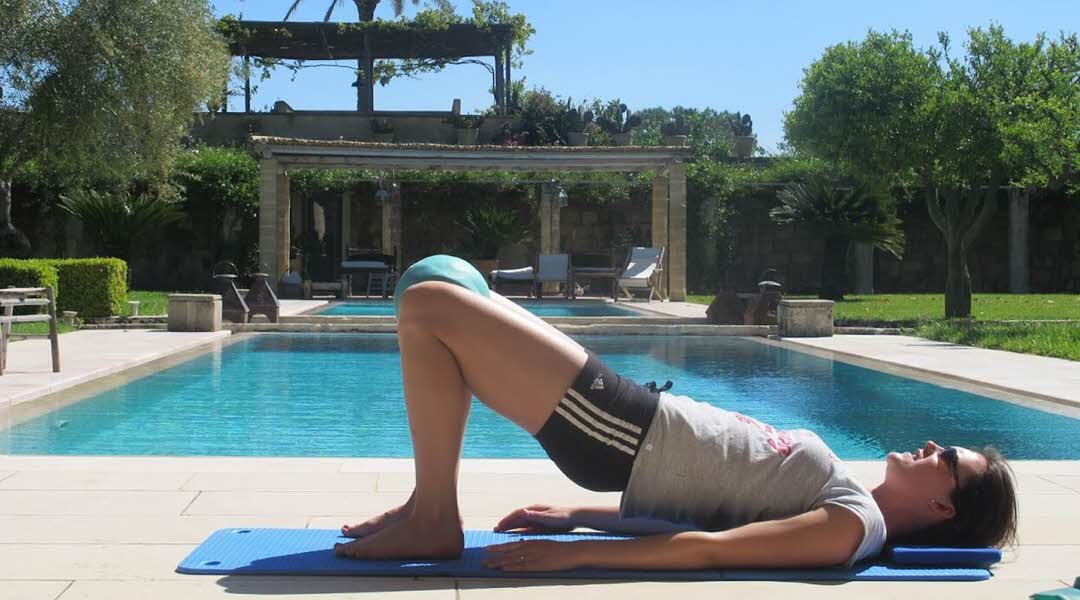
You will not find specific exercises which solely benefit your backside. But, with whole-body Pilates workout, a major bonus is that every single exercise involves your backside in some way or form.
This benefit of Pilates isn’t as well-known as others however, the exercise targets not only your glutes, but also the muscles that support your hips, like your hamstrings, quads and outer and inner thighs.
12. Improves your sports performance
Many sportsmen and women find that their body are misaligned due to the one-sided nature of certain sports. For example, swinging a tennis racket or golf clubs.
As Pilates benefits the balance of your body, develops muscular symmetry and aligns your posture, sportsmen and women find that Pilates can help to reduce the likelihood of injuries.
13. Improves your sex life
There are several exercises which mimic the similar action of the Kegel exercise (which strengthens the pelvic floor muscles and consequently supports the uterus, bladder, small intestine and rectum).
Exercises which involve lifting your pelvic floor strengthen those muscles, which can increase your pleasure in the bedroom.
14. Improves your blood circulation
Another benefit of Pilates is that the more flexible you are, the better your blood circulation is, as blood can flow more freely through your body. This benefits your heart being healthy and also making your brain a lot sharper.
This can help to promote cell growth, organ function and gives you healthier skin, and as Joseph calls it, for “bodily house cleaning”.
15. Makes you more aware of your body
The heavy focus on breathing, your posture and controlled movement, will translate into your everyday life as you become more aware of how you are treating your body. This could be from basic things like sitting on your sofa to picking up your shopping bags.
Pilates also teaches you to have symmetry and coordination, to hold in your navel, square your shoulders and be aware of your posture. This benefits you as it will all come naturally over time as you become more aware of your body.
16. Pilates prevents the risk of injuries
Similar to point 12, you are less likely to obtain any risks of receiving injuries through regular Pilates. This applies to everyone, from the elderly to professional dancers.
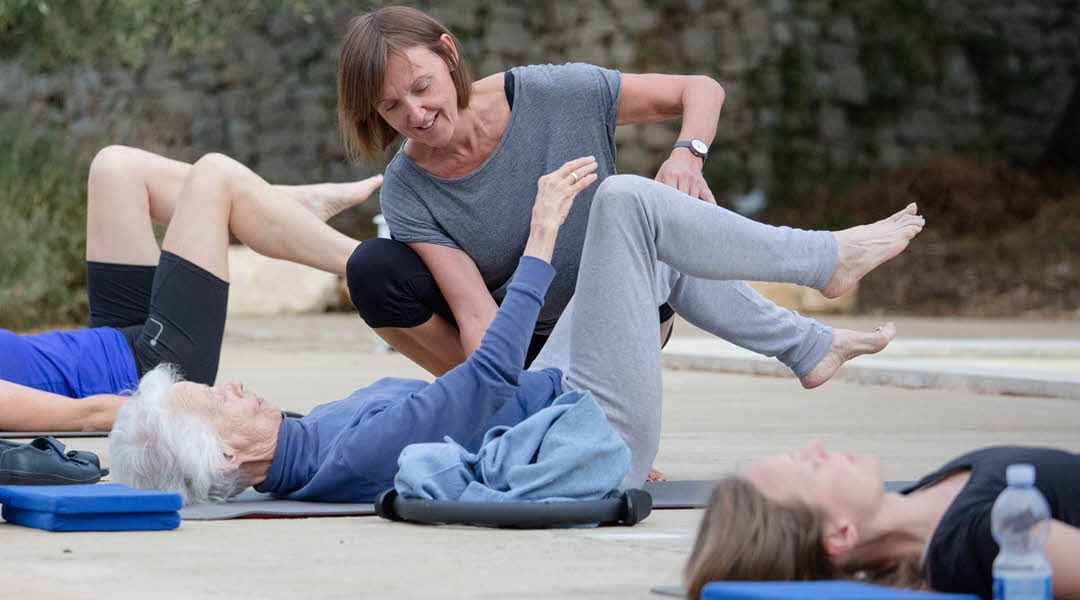
People of all sizes, shapes, and ages can do Pilates. Pilates classes will help you take advantage of the many benefits of Pilates. Regular Pilates practice can increase the strength and coordination of the core muscles of the body.
17. Can help you learn and think faster while improving memory
In 2013 a study was carried out in China where scientists measured changes in brain activity during Pilates exercises. They discovered an increase in the brain’s alpha peak power after 10 weeks of Pilates training, which plays a part in your ability to think and solve problems.
This may be a useful way of helping people with brain-degenerative diseases and cognitive dysfunctions that affect learning, memory and thinking.
18. Gives you strength without the bulky muscles
You are more likely to associate Pilates with a long, lean and toned body, as you don’t see bulky muscle as a result of it. This is due to how the exercises elongate and stretch your muscles, which plays an important part in toning your body.
Pilates is so effective and so powerful, that when you are taught properly, it can make your entire body stronger and more flexible in no time at all! The physical benefits of Pilates include an increase in muscle strength and tone without creating bulk.
19. Understand your body’s limits to test yourself without causing pain
Pilates does not encourage you to compete with other participants to “win”. Pilates is more about understanding your body’s limit, and knowing where your limit is. With regular exercises, you will gradually notice that your threshold increases without any pain at all.
20. Pilates is gentle but challenging
Don’t be fooled that many exercises are in reclining or sitting positions. Nor the fact that it is a low-impact form of exercise that doesn’t put pressure on your joints.
Pilates is a perfectly gentle and safe exercise for everyone, but still challenging enough, as there are categories ranging from beginner to advanced. As the challenge and intensity increases, your body adapts to the exercises, and your body conditioning improves.
21. Can assist with weight loss
Many people have wondered whether Pilates is good for weight loss. Some studies have shown that it can certainly help with that, particularly as Pilates helps the body in a variety of different ways listed here to bring a more healthy and rounded lifestyle. Not to mention creating lean muscle mass.
22. Helps to cut down on body fat and lower cholesterol levels
The added effects that come with having a leaner body mass, the higher your metabolism becomes which helps you burn more fat.
Thankfully, Pilates benefits you by helping you to achieve that lean body by toning your body and increasing lean muscle. This will gradually help you to lose weight easier along with a healthy diet and regular exercise.
23. Beneficial both during and after pregnancy
Is Pilates okay during pregnancy? Yes, a bit like yoga, it uses breathing exercises, which help you relax. It is a good exercise to do during pregnancy as it does not put too much strain on your joints.
One of the great benefits of Pilates is how it can help with spinal and pelvic alignment. This is particularly beneficial for pregnant women and women who have just given birth, as the physical changes that come with pregnancy can put a strain on your alignment.
During pregnancy, Pilates can help to maintain your level of fitness, strengthen your pelvic muscles and also promote efficient body mechanics – these are ideal as your body prepares for the strain of childbirth. You should change some exercises as you get further along in your pregnancy – ask your Pilates instructor for advice.
During childbirth, the strengthened pelvic floor will also make it easier for mothers-to-be to give birth. And after the pregnancy, Pilates can help you to recover and return your pre-pregnancy body.
24. Minimises any pain that is associated with Alzheimer’s
Those who are suffering from pain linked to Alzheimer’s may find that the low-impact form of Pilates exercises can help to minimise the pain by promoting the mind-body awareness.
25. Another benefit of Pilates is that it boosts your stamina
Through regular and repetitive sequences of exercises, your body is adapting and gradually learning to endure with such exercises for longer each time as your endurance improves.
A benefit of Pilates is that you can improve your kinaesthetic awareness. Believe it or not, Pilates could make you run faster!
26. Gives you a lean, tall body…
We have mentioned earlier that Pilates does not give you bulky muscle. The elongation and stretching of your muscles are more likely to promote a lean, tall body.
Be aware that Pilates does not change the shape of your body, but does make your body leaner and sculpted.
27. …which can consequently help your body to digest your food easier
A good digestion process is a critical part of your health and well-being, and some people are not aware that exercise can help improve your digestion.
Thanks to the unique moves that are not available elsewhere, Pilates can help to stimulate the digestive system through various ways. These include assisting to increase vital fluids, deep massage which affects internal organs, and metabolic increase.
A health benefit of Pilates is that it can decrease irritation in the gut as well as helping stretching the digestive track.
28. Pilates is versatile and very adaptable to your needs
Thanks to the variety of ranges in difficulty and also the array of poses, it is easy to find Pilates exercises that are just right for you. And it is also means you won’t feel left out from the rest of the class.
Joseph Pilates created a coordination of the mind, body and spirit called Contrology. The Contrology has 34 original exercises that were taught to his students. All exercises are different and we are pretty certain you will find a few exercises that will fit the range that your body is capable for.
29. You can do Pilates at home
If there are no Pilates studios nearby, there are several options for those who are keen to practice at home. Thanks to technology, some participants “attend” classes online via video platforms with a professional instructor on the other side.
There are also online subscriptions like Power Pilates where there are workouts for all levels. In addition, videos can be found on YouTube for any level of Pilates. This is ideal if you want to choose when you want to exercise, and at your own pace. There is also a website that gives you free access to Pilates videos on Pilates Live which will be hosted by a Pilates expert!
30. Pilates raises your energy level
As you are learning to improve your breathing technique, improve your blood circulation throughout your body, increase your flexibility and improve your spinal health, Pilates will make you feel good and naturally boost your energy levels.
Doing Pilates will reduce you feeling fatigued. It will give you a real good boost of energy.
31. Plus-size individuals can participate
We have mentioned several times that Pilates is for anyone, regardless of your age, fitness level, and your pain threshold.
It is also suitable for plus-size participants, and here is an article from verywellfit.com to show how Pilates can benefit people with larger body types with some useful tips!
32. Releases anti-ageing stress
Like many forms of exercise, practising Pilates will help to release anti-ageing, stress-relieving chemicals called Endorphins. These are the natural feel-good boosters, which will leave you feeling “naturally high” and boost your mood.
On top of diet, dermatologist Nicholas Perricone recommends exercises such Pilates to give you a natural face lift look.
33. Learn how to move efficiently
For some people, modern living and occupational hazards mean that we forget how to move efficiently and this can put a strain on our body. Pilates is a great way to “re-educate” our bodies on how to move efficiently and create balance in your body. The more you carry out Pilate exercises, the more it will become second nature to your posture when moving.
34. Lowers blood pressure
Another health benefit of Pilates is how it can contribute to lowering your blood pressure. It has be shown that mat Pilates “reduces clinical and ambulatory blood pressure”, and interestingly is a great non-drug treatment for hypertension.
35. Assists with recovery from injuries
Joseph Pilates used his techniques to rehabilitate injured soldiers during WWI.
Today, if you search for ‘Pilates injuries recovery’, and you will see hundreds of businesses providing similar injury rehabilitation services through Pilates. You will be surprised at how many people get given Pilates exercises on a daily basis to recover injuries.
36. Strengthens your immune system
Just like many gentle exercises which encourage muscle movement and breathing, Pilates can play a part in boosting your immune system. Hopefully, this will help to reduce the amount of sniffles you get during the winter.
37. Improves your breathing irregularity
In Pilates there is such a big focus on your breathing and blood circulation, that it will gradually help to improve any breathing irregularity that you may have. Many pop artists (like Madonna) use Pilates to help control their breathing when performing on stage during tours.
38. Helps to reduce the amount of headaches you get
On top of back ache and neck ache, poor posture can play a big part in headaches and, sometimes, migraines. In the short term, you may get a complete, or temporary, relief from it. For the long-term, the aim is to improve your posture which can consequently help to prevent the occurrence of headaches. Pilates exercises are not hard and can be very easy to pick up. Don’t cause yourself more migraines at the thought of a hard exercise!
39. Can help with your sleeping and reduces insomnia
One study has found that regular Pilates can help with your sleeping pattern. A good night’s sleep was an important part of living for Joseph Pilates and this will have a natural knock-on effect, such as a better mood and more energy.
Better sleep leads to a healthier and happier life. A 20 minute Pilates exercise can make such a difference and you will see how your life improves mentally and physically.
40. Pilates improves balance & reduces the fear of falling for the more elderly
Fear of falling is a major health risk for elderly people, not only because of the physical risk but how it might affect their quality of life. A 2022 study by researchers in Portugal has linked Pilates to, not only improving the balance of older women (amongst many other benefits mentioned above), but also reduced their fear of falling.
41. Helps musicians with their posture and lung capacity
Many musicians suffer from various pains in their arms, neck and/or shoulder due to repetitive motions, hectic lifestyle, excessive force and awkward positions that come with being a musician. Pilates can help to reduce a musicians’ pain as well as fixing the poor posture that comes from awkward positions or carrying heavy instruments.
It can also help to improve a wind musician’s lung function and capacity thanks to the breathing exercises that come with the exercise.
A Pilates instructors thoughts…
Eleanor from Shoreline Pilates shares with us her benefits of Pilates:
“A Pilates class gives me the perfect break in the day to concentrate on just me and my body and how it feels. I find that when I do Pilates, there is so much to concentrate on – from the breathing to the movements to co-ordination to flowing – that there is no room in my mind to worry about daily anxieties and concerns. For me, this one hour is essential to give my mind a break and reconnect with myself and my body, leaving me feeling refreshed, calm and grounded.”
In summary… is Pilates good for you?
It is a resounding Yes, Pilates is good for you in so many ways. Pilates is much more than just a good workout. If you know any doubters out there about Pilates, feel free to share this article. Is it time for you to reward yourself to a Pilates retreat, and experience some of those amazing health benefits yourself?
And if you want to read more about Pilates, head on over to our article on popular quotes by Joseph Pilates.
Disclaimer:
- Our list of benefits is from pilates experts
- Always seek professional medical advice before taking up a new exercise program
- Pilates is not a substitute for professional medical advice, or a balanced diet and healthy lifestyle
Originally published 29 April 2016 | Updated 2022 & 2026.
Thanks a lot for sharing this with all of us.
Combining Pilates and Hypopressives can offer a more holistic approach.
Here are a couple of benefits:
Improved Core Strength: Pilates focuses on strengthening the core muscles while Hypopressives targets the deep abdominal and pelvic floor muscles. This can help improve overall core strength and stability.
Better Posture: Pilates exercises promote proper alignment and balance, while hypopressives can help alleviate muscle tension, resulting in improved posture.
It is important to note that while both Pilates and hypopressives have numerous health benefits, they should be performed under the guidance of a qualified instructor, especially for individuals with specific health conditions.
I can’t see anything was missed, even bedroom benefits. Pilates definitively helps and for both partners. Certainly you can do it at home.